
Product Description
Who we are?
HangZhou XIHU (WEST LAKE) DIS. CARDANSHAFT CO;LTD has 15 years history.When the general manager Mr.Rony Du graduated from the university,he always concentrated his attention on the research and development,production and sales of the cardan shaft.Mr.Rony Du and his team started from scratch,from 1 lathe and a very small order,step by step to grow up.He often said to his team”We will only do 1 thing well——to make the perfect cardan shaft”.
General manager Mr.Rony Du
HangZhou XIHU (WEST LAKE) DIS. CARDANSHAFT CO.,LTD was founded in 2005.The registered capital is 8 million ,covers an area of 15 acres, has 30 existing staff. The company specializing in the production of SWC, SWP cross universal coupling and drum tooth coupling.The company with factory is located in the beautiful coast of Tai Lake –Hudai (HangZhou Economic Development Zone Hudai Industrial Park).
In order to become China’s leading cardan shaft one-stop solution expert supplier .XIHU (WEST LAKE) DIS. CARDANSHAFT independent research and development of SWC light, medium, short, heavy Designs cardan shaft have reached the leading domestic level.Products not only supporting domestic large and medium-sized customers, but also exported to the United States, India, Vietnam, Laos, Ukraine, Russia, Germany, Britain and other countries and areas.In the past 15 years, the company has accumulated a wealth of experience, learn from foreign advanced technology, and to absorb and use the universal axis has been improved several times, so that the structure is maturing, significantly improved performance.
XIHU (WEST LAKE) DIS. Office Building
XIHU (WEST LAKE) DIS. belief: “Continuous innovation, optimize the structure, perseverance” to create a high quality of outstanding cardan shaft manufacturer.We always adhere to the ISO9001 quality control system, from the details to start, standardize the production process, and to achieve processing equipment “specialization, numerical control” rapid increase in product quality.This Not only won the majority of customers reputation, but also access to peer recognition. We continue to strive to pursue: “for customers to create the greatest value, for the staff to build the best platform”, will be able to achieve customer and business mutually beneficial CZPT situation.
Welcome to XIHU (WEST LAKE) DIS. CARDANSHAFT
Why choose us?
First,select raw material carefully
The cross is the core component of cardan shaft,so the selection of material is particularly critical.Raw materials of the cross for light Duty Size and Medium Duty Size,we choose the 20CrMnTi special gear steel bar from SHAGANG GROUP.Being forged in 2500 ton friction press to ensure internal metallurgical structure,inspecting the geometric dimensions of each part to meet the drawing requirements,then transfer to machining,the processes of milling, turning, quenching and grinding.
The inspector will screen blank yoke head.The porosity, cracks, slag, etc. do not meet the requirements of the casting foundry are all eliminated,then doing physical and chemical analysis, to see whether the ingredients meet the requirements, unqualified re-elimination.And then transferred to the quenching and tempering heat treatment, once again check the hardness to see if meet the requirements, qualified to be transferred to the machining process. We control from the source of the material to ensure the supply of raw materials qualified rate of 99%.
Second,advanced production equipment
XIHU (WEST LAKE) DIS. Company introduced four-axis linkage machining center made in ZheJiang , milling the keyway and flange bolt hole of the flange yoke, The once machine-shaping ensures that the symmetry of the keyway and the position of the bolt hole are less than 0.02mm,which greatly improves the installation accuracy of the flange,the 4 axis milling and drilling center holes of the cross are integrated,to ensure that the 4 shaft symmetry and verticality are less than 0.02mm,the process of the journal cross assembly service life can be increased by 30%, and the speed at 1000 rpm above the cardan shaft running smoothly and super life is crucial to the operation.
We use CNC machine to lathe flange yoke and welded yoke,CNC machine can not only ensure the accuracy of the flange connection with the mouth, but also improve the flange surface finish.
5 CZPT automatic welding machine welding spline sleeve and tube,welded yoke and tube.With the welding CZPT swing mechanism, automatic lifting mechanism, adjustment mechanism and welding CZPT cooling system, welding machine can realize multi ring continuous welding, each coil current and voltage can be preset, arc starting and stopping control PLC procedures, reliable welding quality, the weld bead is smooth and beautiful, to control the welding process with fixed procedures, greatly reducing the uncertainty of human during welding, greatly improve the welding effect.
High speed cardan shaft needs to do dynamic balance test before leaving the factory.Unbalanced cardan shaft will produce excessive centrifugal force at high speed and reduce the service life of the bearing;the dynamic balance test can eliminate the uneven distribution of the casting weight and the mass distribution of the whole assembly;Through the experiment to achieve the design of the required balance quality, improve the universal shaft service life.In 2008 the company introduced 2 high-precision dynamic balance test bench, the maximum speed can reach 4000 rev / min, the balance of G0.8 accuracy, balance weight 2kg–1000kg.
In order to make the paint standardization, in 2009 the company bought 10 CZPT of clean paint room , the surface treatment of cardan shaft is more standardized, paint fastness is more rugged, staff’s working conditions improved, exhaust of harmless treatment.
Third,Professional transport packaging
The packing of the export cardan shaft is all in the same way as the plywood wooden box, and then it is firmly secured with the iron sheet, so as to avoid the damage caused by the complicated situation in the long-distance transportation. Meet the standard requirements of plywood boxes into Europe and other countries, no matter where can successfully reach all the country’s ports.
SWC-I Series-Light-Duty Designs Cardan shaft
Designs
Data and Size of SWC-I Series Universal Joint Couplings
1. Notations:
L=Standard length, or compressed length for designs with length compensation;
LV=Length compensation;
M=Weight;
Tn=Nominal torque(Yield torque 50% over Tn);
TF=Fatigue torque, I. E. Permissible torque as determined according to the fatigue strength
Under reversing loads;
β=Maximum deflection angle;
MI=weight per 100mm tube
2. Millimeters are used as measurement units except where noted;
3. Please consult us for customizations regarding length, length compensation and
Flange connections.
| Material: | Alloy Steel |
|---|---|
| Load: | Drive Shaft |
| Stiffness & Flexibility: | Stiffness / Rigid Axle |
| Journal Diameter Dimensional Accuracy: | IT6-IT9 |
| Axis Shape: | Straight Shaft |
| Shaft Shape: | Hollow Axis |
| Customization: |
Available
| Customized Request |
|---|
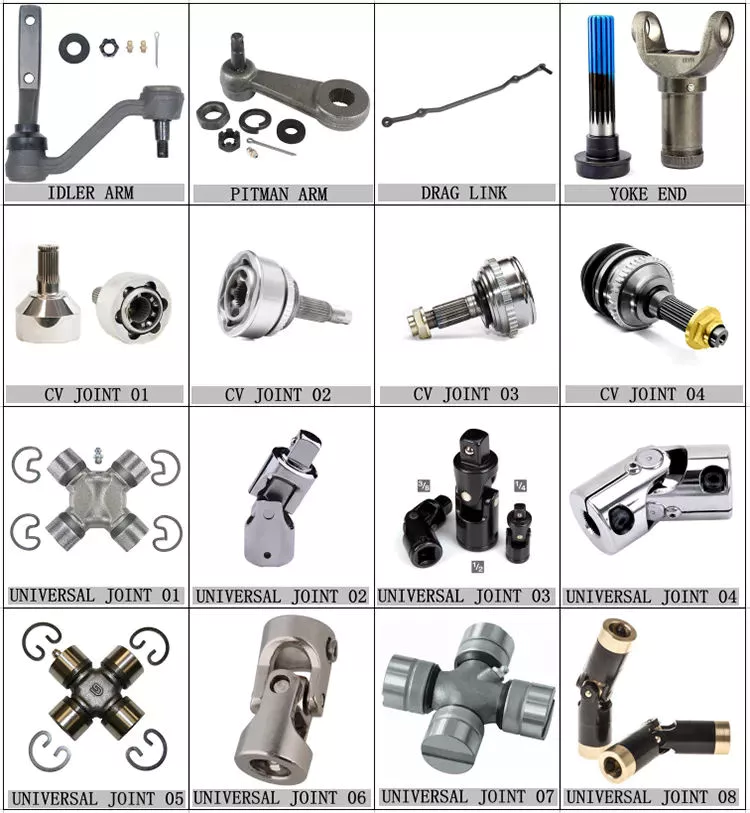
How do manufacturers ensure the compatibility of PTO drive shafts with different equipment?
Manufacturers of PTO (Power Take-Off) drive shafts employ various strategies and considerations to ensure the compatibility of their products with different types of equipment. These measures are implemented during the design, manufacturing, and testing phases, and they include:
1. Standardization:
Manufacturers adhere to industry standards and specifications when designing and producing PTO drive shafts. Standards such as ISO 5676 and ASAE S205.6 provide guidelines for dimensions, safety requirements, and performance characteristics. By following these standards, manufacturers can ensure that their drive shafts are compatible with a wide range of equipment that conforms to the same industry standards.
2. Engineering Design:
Manufacturers employ experienced engineers who design PTO drive shafts with compatibility in mind. They consider factors such as torque requirements, speed ratings, operating conditions, and power transfer efficiency. The engineering design process involves selecting appropriate materials, calculating component dimensions, determining connection methods, and considering factors like misalignment compensation. Attention to these design aspects ensures that the drive shafts can handle the demands of different equipment while maintaining compatibility.
3. Customization Options:
Manufacturers often provide customization options to meet specific equipment requirements. Customers can request PTO drive shafts with customized lengths, connection types, and protective features. By offering customization, manufacturers can tailor the drive shafts to fit specific equipment setups, ensuring compatibility with different machines and applications.
4. Compatibility Guidelines:
Manufacturers provide compatibility guidelines and specifications for their PTO drive shafts. These guidelines outline the recommended application, power limits, connection methods, and other relevant information. Equipment manufacturers and end-users can refer to these guidelines to ensure that the PTO drive shafts they select are compatible with their specific equipment and operating conditions.
5. Testing and Validation:
Manufacturers subject PTO drive shafts to rigorous testing and validation procedures. The testing process includes evaluating various performance parameters such as torque transmission, speed ratings, durability, and vibration resistance. By conducting extensive testing, manufacturers verify the compatibility of their drive shafts with different equipment and ensure that they meet or exceed the necessary standards and specifications.
6. Collaboration with Equipment Manufacturers:
Manufacturers often collaborate with equipment manufacturers to ensure compatibility between their PTO drive shafts and the related machinery. By working closely with equipment manufacturers, drive shaft manufacturers can obtain detailed specifications and requirements for the equipment. This collaboration allows for the development of PTO drive shafts that are specifically designed to integrate seamlessly with the equipment, ensuring optimal compatibility and performance.
7. Ongoing Research and Development:
Manufacturers invest in research and development initiatives to continuously improve the compatibility of PTO drive shafts. They stay abreast of industry trends, technological advancements, and evolving equipment requirements. By staying proactive and innovative, manufacturers can develop drive shaft designs that anticipate the compatibility needs of new and emerging equipment technologies.
8. Technical Support and Documentation:
Manufacturers provide technical support and documentation to assist equipment manufacturers and end-users in selecting and installing PTO drive shafts. This support may include detailed installation instructions, troubleshooting guides, and compatibility charts. By offering comprehensive technical resources, manufacturers ensure that the drive shafts are correctly integrated into different equipment configurations.
In conclusion, manufacturers ensure the compatibility of PTO drive shafts with different equipment through standardization, engineering design, customization options, compatibility guidelines, testing and validation, collaboration with equipment manufacturers, ongoing research and development, and providing technical support and documentation. These efforts ensure that PTO drive shafts can be seamlessly integrated into a wide range of equipment, enabling efficient power transfer and reliable operation.
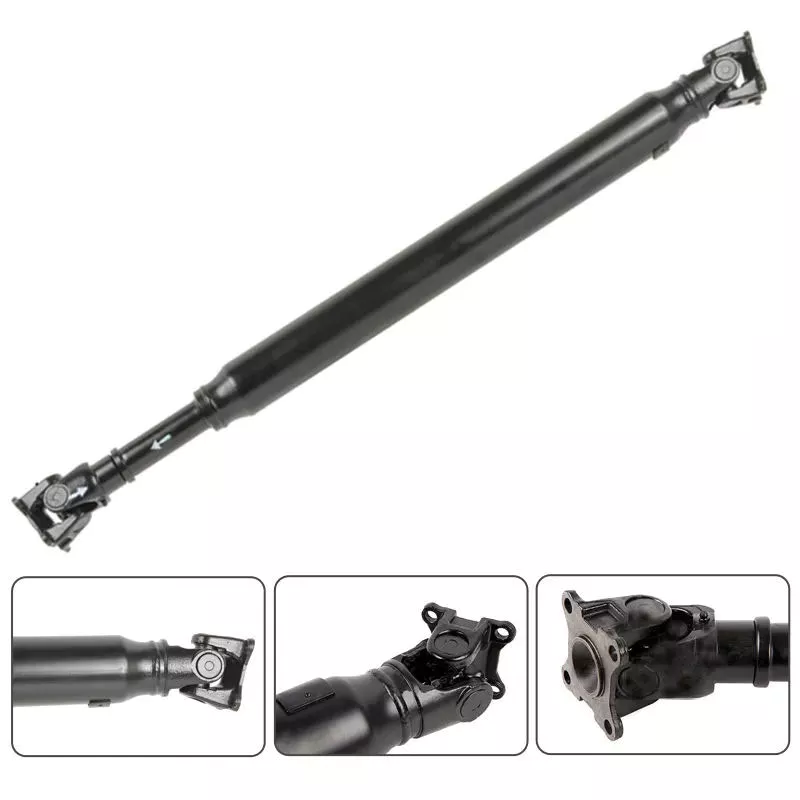
How do PTO drive shafts handle variations in load and torque during operation?
PTO (Power Take-Off) drive shafts are designed to handle variations in load and torque during operation, providing a flexible and efficient power transmission solution. They incorporate several mechanisms and features that enable them to accommodate changes in load and torque. Here’s how PTO drive shafts handle variations in load and torque:
1. Flexible Couplings:
PTO drive shafts typically utilize flexible couplings, such as universal joints or constant velocity joints, at both ends. These couplings allow for angular misalignment and compensate for variations in load and torque. They can accommodate changes in the orientation and position of the driven equipment relative to the power source, reducing stress on the drive shaft and its components.
2. Spring-Loaded Friction Discs:
Some PTO drive shafts incorporate spring-loaded friction discs, commonly known as torque limiters or overload clutches. These devices provide a mechanical means of protecting the drive shaft and connected equipment from excessive torque. When the torque exceeds a predetermined threshold, the friction discs slip, effectively disconnecting the drive shaft from the power source. This protects the drive shaft from damage and allows the system to handle sudden increases or spikes in torque.
3. Slip Clutches:
Slip clutches are another mechanism used in PTO drive shafts to handle variations in torque. Slip clutches allow controlled slippage between the input and output shafts when a certain torque level is exceeded. They provide a means of limiting torque transmission and protecting the drive shaft from overload. Slip clutches can be adjustable, allowing the desired torque setting to be customized based on the specific application.
4. Torque Converters:
In certain applications, PTO drive shafts may incorporate torque converters. Torque converters are fluid coupling devices that use hydraulic principles to transmit torque. They provide a smooth and gradual ramp-up of torque, which helps in handling variations in load and torque. Torque converters can also provide additional benefits such as dampening vibrations and mitigating shock loads.
5. Load-Bearing Capacity:
PTO drive shafts are designed with sufficient load-bearing capacity to handle variations in load during operation. The material selection, diameter, and wall thickness of the drive shaft are optimized based on the anticipated loads and torque requirements. This allows the drive shaft to effectively transmit power without excessive deflection or deformation, ensuring reliable and efficient operation under different load conditions.
6. Regular Maintenance:
Proper maintenance is essential for the reliable operation of PTO drive shafts. Regular inspection, lubrication, and adjustment of the drive shaft components help ensure optimal performance and longevity. By maintaining the drive shaft in good condition, its ability to handle variations in load and torque can be preserved, reducing the risk of failures or unexpected downtime.
It’s important to note that while PTO drive shafts are designed to handle variations in load and torque, there are limits to their capacity. Exceeding the recommended load or torque limits can lead to premature wear, damage to the drive shaft and connected equipment, and compromise safety. It is crucial to operate within the specified parameters and consult the manufacturer’s guidelines for the specific PTO drive shaft model being used.
By incorporating flexible couplings, torque limiters, slip clutches, torque converters, and ensuring adequate load-bearing capacity, PTO drive shafts can effectively handle variations in load and torque during operation. These features contribute to the versatility, efficiency, and reliability of PTO drive shaft systems across a wide range of applications.

What benefits do PTO drive shafts offer for various types of machinery?
PTO (Power Take-Off) drive shafts offer several benefits for various types of machinery in agricultural and industrial applications. They play a critical role in transferring power from a primary power source, such as a tractor or engine, to different types of machinery and equipment. Here’s a detailed explanation of the benefits provided by PTO drive shafts:
1. Versatility:
PTO drive shafts enhance the versatility of machinery by allowing them to be powered by a wide range of power sources. Tractors, engines, or other primary power sources can be used to provide rotational power, which can then be transferred through the PTO drive shaft to different types of machinery. This versatility enables the same power source to be utilized for various tasks and applications.
2. Increased Efficiency:
By utilizing a PTO drive shaft, machinery can tap into the power generated by a primary power source, such as a tractor’s engine, without the need for a separate engine or power supply. This eliminates the need for additional fuel consumption and maintenance associated with multiple power sources, leading to increased overall efficiency and reduced operating costs.
3. Cost-Effectiveness:
PTO drive shafts offer a cost-effective solution for powering machinery. Instead of investing in separate engines or power units for each piece of equipment, machinery can be directly connected to a primary power source with the use of a PTO drive shaft. This reduces the capital investment required for additional power sources and improves cost efficiency in the long run.
4. Ease of Installation and Operation:
PTO drive shafts are designed for easy installation and operation. They typically feature a standardized connection system, allowing for quick and simple attachment to the power source and machinery. This ease of installation and operation saves time and effort during equipment setup and ensures smooth integration between the power source and machinery.
5. Flexibility and Interchangeability:
PTO drive shafts offer flexibility and interchangeability between different implements and machinery. As long as the machinery has a compatible PTO input connection, it can be easily connected to the PTO drive shaft. This allows for quick swapping of implements and machinery, making it convenient to adapt to changing tasks and operational requirements.
6. Power Adjustability:
PTO drive shafts provide the ability to adjust the power output to machinery. Tractors or power sources typically have multiple PTO speed settings, allowing operators to match the rotational speed and power requirements of the machinery being driven. This adjustability ensures optimal performance and prevents damage to the machinery due to excessive or insufficient power.
7. Maintenance and Safety:
PTO drive shafts generally require less maintenance compared to separate engines or power units. They are designed for durability and reliability, with proper lubrication and periodic inspection being the main maintenance requirements. Additionally, PTO drive shafts can be equipped with safety features such as guards or shields to protect operators from potential hazards associated with rotating components.
8. Compatibility with Various Machinery:
PTO drive shafts are compatible with a wide range of machinery and equipment used in agricultural and industrial applications. They can power different types of implements, such as mowers, balers, tillers, harvesters, pumps, and generators, making them suitable for various tasks and industries.
Overall, PTO drive shafts offer numerous benefits for various types of machinery. They enhance versatility, increase efficiency, reduce costs, and provide ease of installation and operation. With their flexibility, adjustability, and compatibility, PTO drive shafts play a vital role in powering machinery and improving overall productivity in agricultural and industrial operations.


editor by CX 2023-12-13